What’s up! As always, we appreciate you taking the time to check out what we have to offer. We are going to break down what it means to listen, what it means to talk and the power of knowing when to do each one.
Listening will change your life
Yes, that statement is true. There is not much more we need to say after this. Listening will, in fact, change your life for the better. When you truly listen, nothing else in the world matters at that moment except for what you’re listening to. You have this focus that can’t be broken for that little period of time. To keep it REAL with you, it’s impossible to listen and talk at the same time. Talking includes in your head. When you’re talking to yourself or even getting ready to reply to what somebody said, you’ve failed to truly listen to the other person. When you try to multi-task, you lose your power of listening. Listening is a superpower and it’s one of the most powerful powers you can have!
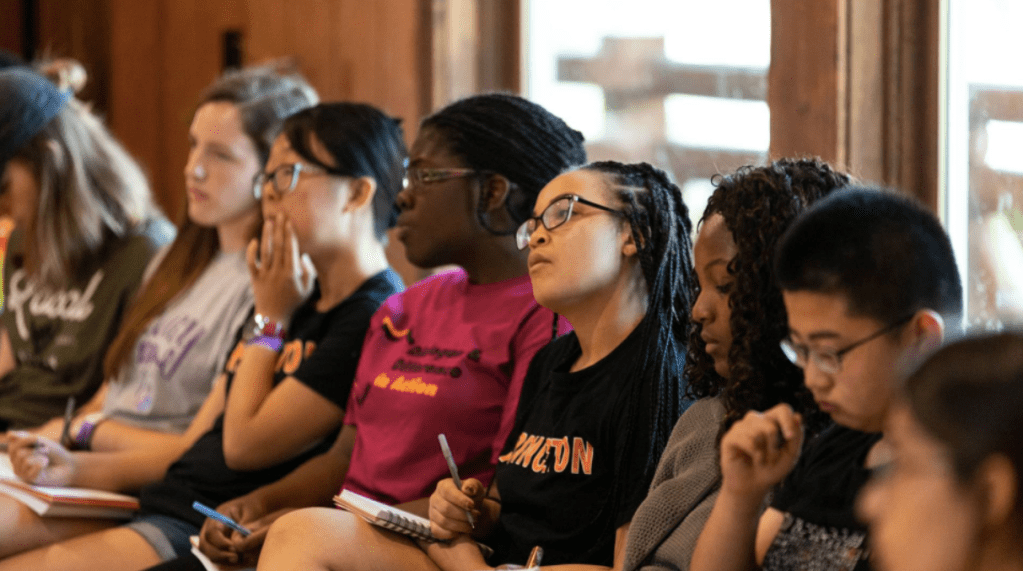
REAL students listen. They understand their superpower and use it to their advantage. When you listen, you learn. When you learn, you grow. It’s as simple as that. You become a more well-rounded individual who enjoys listening because you begin to feel your growth.
There is power in appreciating different perspectives and what they have to offer. We are letting you know right now that it’s okay to over-listen, especially as students, because even though you didn’t share anything valuable, you’ve gained a lot of valuable information from different perspectives. When you have all these different perspectives to navigate, you’ll be able to create your own, unique perspective that shapes how you move based on the information you’ve gathered. This is the secret of a great chess player. They understand the power of letting the opposing player show how they move before they show their moves. By doing this for yourself, you allow yourself more time to react in a calculated way, instead of acting based on emotion or simply because you want to be heard.

What really happens when you listen (too much) can be further explained in The 48 Laws of Power, which gives a great (and powerful) perspective on silence and how to use silence to your advantage. There are a lot of “laws of power” that you can positively apply to your life. Use this book and apply it to how you view education and learning. We highly encourage you to figure out how to apply these laws to education and learning. You’d be surprised at the empowerment you will begin to feel.
Another benefit of listening is that the more you listen, the more people actually want to talk to you. They’ll share more information with you that you can apply to your life or even theirs to improve it. We will get into active listening, which is the only form of true listening, in a second, but you know you’ve mastered this superpower when you can apply what you’ve listened to in a positive way to your life and the lives around you.
Talking will keep your life the same

Think about it this way, when you listen you are gathering information; when you talk, you’re sharing information (unless you’re asking questions which is something else we will discuss in a second). You’re sharing the information you’ve gained from your experiences, which should hopefully be meant to help others. That’s what REAL teachers do. REAL teachers share valuable information with their students, who should hopefully use that information in a positive way. Again, REAL teachers teach inside the classroom and outside the classroom. It’s the student’s job to listen and learn from someone who has had experiences that maybe they haven’t had yet. The best part about listening to someone who’s experienced a bit more is that you can hopefully learn from their mistakes, so you don’t make them when it’s your time.
When you think about it this way, since we are all students for the majority of our lives, we will start to listen more than we speak. We will only begin talking when we have something positive to share with someone. You’ll become more self-aware of moments where you talked instead of listened and you’ll realize the power in both. It’s all about keeping a balance between the two and understanding when the right time is for both. Again, when you listen, you learn; and when you learn, you grow. When you talk, you share; and when you share, hopefully it’s with care.
How to be a good (active) listener
Now that we’ve convinced you that it’s probably a good idea to listen before you speak, let’s show you how. A good listener is active, which means they acknowledge what they’re listening to in some way, then act on it. When you listen to someone, a good way to let them know you’re listening is to ask them multiple questions about it. Yes, it’s cool to just ask one question but we say multiple because it just takes it a step further. Not only do they think you’re listening, but you can gain more valuable information simply by asking them focused questions.
Let’s keep it REAL, when you’re talking and someone shows interest, you feel a good vibe with them and want to continue. On the other hand, when you share something and they don’t respond or give a one-word response, it doesn’t feel like they care (or at least not as much as you do). Figure out some follow-up questions you can ask someone; it’ll benefit both sides of the conversation. But please, let the questions flow naturally. It’s awkward if you have pre-determined questions already set in your mind that you want them to answer before they even finish talking. A good strategy is to just reflect on what they said and think about how it applies to your life so you can make sense of it. An easy question to ask if you just can’t think of anything is to confirm what they said by restating it in your own way and asking if that’s what they meant.
If you’ve made it this far, again, we appreciate you! We hope this was valuable for you or at least a good reminder of the power of listening. It’s always the right time to listen. The true power is knowing when it’s the right time to speak. As a student, our primary job is the listen; but that’s not our only job. There will be times when students need a voice, but how powerful will that voice be when we gain all these different perspectives and can now apply them in a way that positive impacts our lives and the lives of our culture? As always, thanks again for checking in with us! We appreciate you.
Keep it REAL.

